

Volunteers from the Raiding the Bank project had the opportunity to dive into the Yorkshire Gliding Club archive. They researched a wide range of stories and several fascinating former members, including Amy Johnson. Drawn by the challenge and freedom of powerless flight, she was an early member of the club. Away from gliding, her groundbreaking career saw her become the first woman to fly solo from England to Australia in 1930.
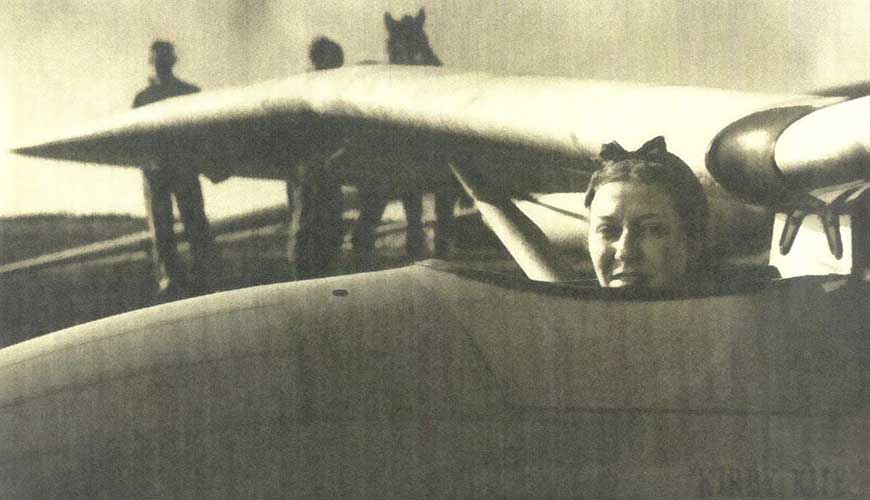
Amy was born in Hull in 1903. She studied economics at the University of Sheffield before moving to London to work as a solicitor’s secretary. In London she discovered her passion for flying at the London Aeroplane Club and earned an aviator’s certificate and “A” pilot’s licence in 1929. In the same year, she became the first British woman to qualify as a ground engineer with an Air Ministry “C” licence. That mix of flying and engineering expertise was unusual, especially for a woman in interwar Britain.
Her famous flight from England to Australia was undertaken in 1930 and firmly stamped her name on the history of aviation; in acknowledgment of this achievement, she was appointed CBE. She went on to set further long-distance records, including a 1931 flight from London to Moscow, in one day, before continuing across Siberia, and on to Tokyo. It was alongside these headline-grabbing journeys, she developed a passion for silent flight.
During the 1930s, Johnson became a friend of Yorkshire glider designer Fred Slingsby. Slingsby helped found the Yorkshire Gliding Club on Sutton Bank in 1934, and Amy was an early member. Her time on this dramatic escarpment links a global aviation story to the skies above the North York Moors National Park, where members of the Yorkshire Gliding Club still fly today.
When the Second World War began, skills such as Amy’s were urgently needed. In 1940 she joined the Air Transport Auxiliary (ATA), the civilian organisation responsible for ferrying Royal Air Force (RAF) aircraft between factories, maintenance units and operational stations.
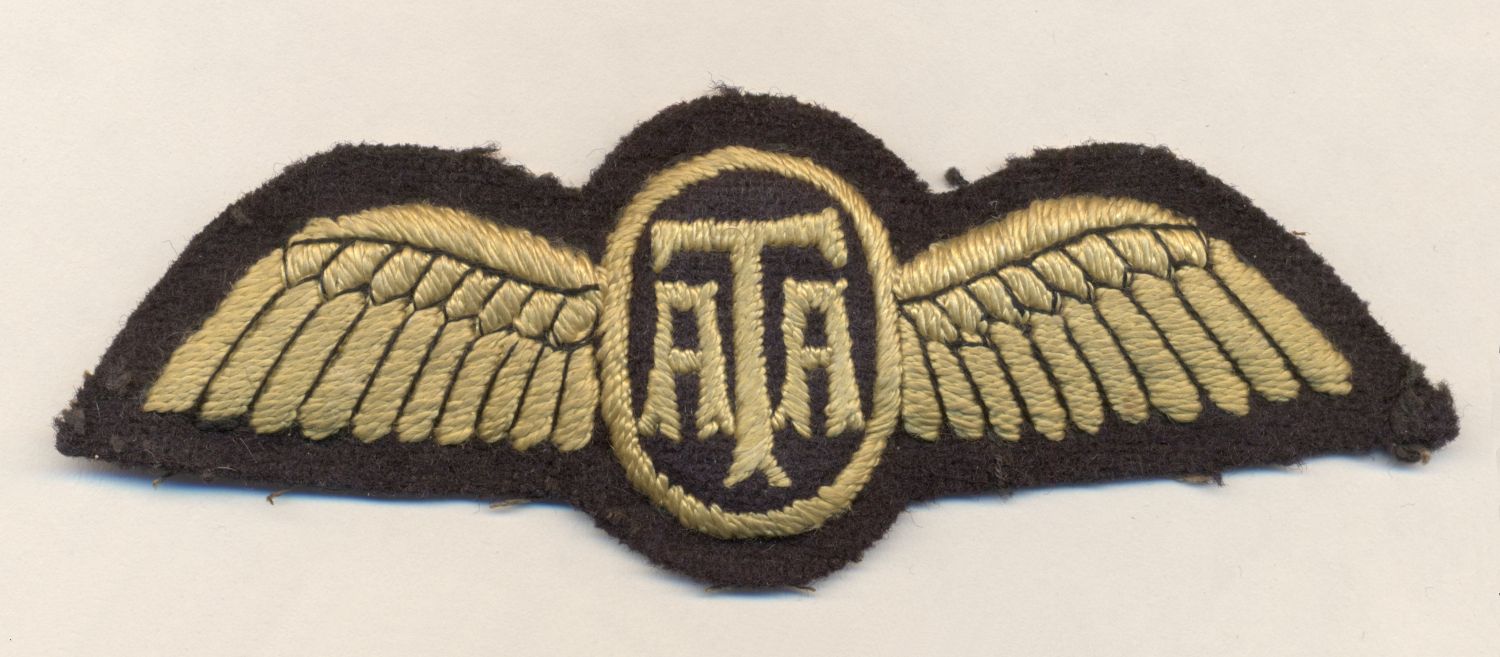
On 5 January 1941, while flying an ATA ferry flight to RAF Kidlington, Amy Johnson went missing. Later that day, a wartime convoy in the Thames Estuary reported seeing a parachute and a person in the water; conditions were bitterly cold, and a rescue attempt failed. Her aircraft had crashed into the estuary, her body was never recovered, and the precise cause of her death remains uncertain.
As a member of the ATA with no known grave, Amy Johnson is commemorated by the Commonwealth War Graves Commission on the Air Forces Memorial at Runneymede.
Firmly part of the Raiding the Bank story, Amy Johnson’s life brings together local and global threads; a young woman from Hull who learned to glide above Sutton Bank, broke world records across continents and finally lost her life in a dangerous service.
This is the second in a series of articles exploring the history uncovered during the Raiding the Bank project. We will return to the Yorkshire Gliding Club archive for more stories soon.